




A newly constructed vehicle shelter at Maranjau Prison in Murang’a County marks a continued push to improve asset protection within public institutions while integrating environmental conservation into infrastructure development.
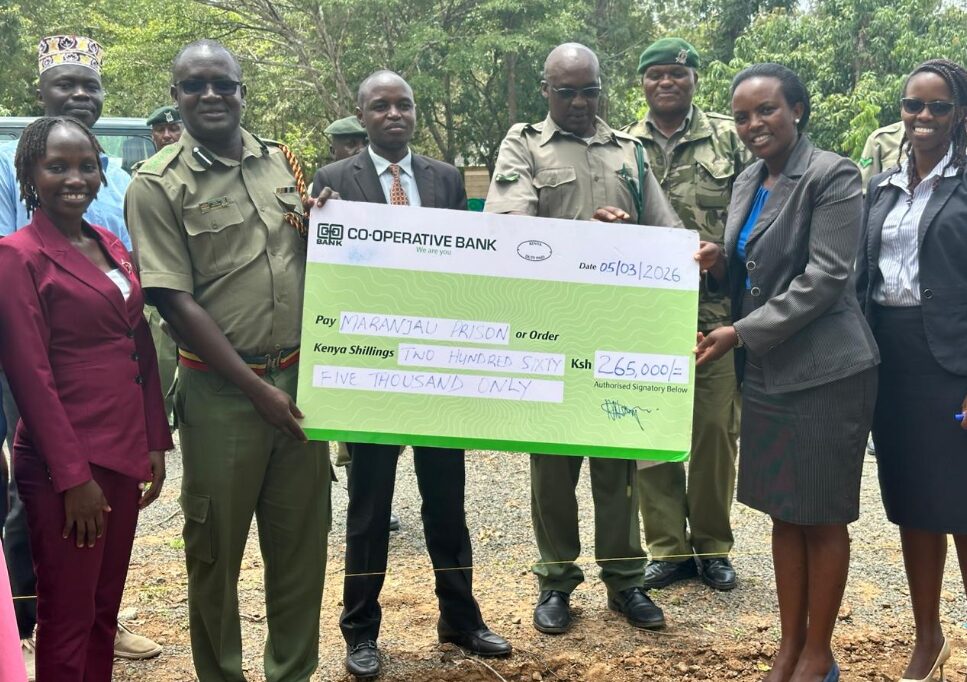
Co-operative Bank of Kenya financed and commissioned the project at a cost of Ksh 265,000, extending its footprint beyond traditional financial services into practical institutional support initiatives with the Kenya Prisons Service.
The car shade, designed to shield government vehicles from prolonged exposure to sun and rainfall, is expected to reduce maintenance cycles and extend the operational lifespan of transport assets used within the correctional facility, an outcome that carries cost implications for public resource management over time.
Such interventions reflect a growing trend where financial institutions are aligning community investments with operational needs in public sector agencies, thereby linking infrastructure support with service delivery outcomes at institutional level.
The project was led by Anne Kamuta, Regional Manager for Central Kenya, who oversaw the commissioning at the Murang’a-based facility in an event that brought together prison officials and local stakeholders.
Said Kamuta, Regional Manager Central Kenya, explaining the rationale behind the initiative, the bank remains committed to strengthening its relationship with the Kenya Prisons Service through practical support that responds to on-the-ground needs while reinforcing long-term collaboration.
Alongside the infrastructure development, the bank carried out a tree planting exercise within the prison grounds, selecting indigenous species suited to the local ecosystem in a move aimed at improving environmental sustainability while contributing to national reforestation efforts.
The integration of green initiatives into institutional projects reflects a shift in corporate engagement strategies, where environmental considerations are increasingly embedded within community investments rather than treated as separate activities.
Kenya’s Co-operative Bank has in recent years expanded its involvement with public sector institutions through targeted interventions that blend financial inclusion with community-based infrastructure, positioning itself as a partner in both economic and social development across the country.
Its linkages with the co-operative movement and public agencies provide a platform through which such initiatives are deployed, often targeting sectors that require both financial and operational support to improve efficiency and resilience.
The Murang’a project, while modest in scale compared to the bank’s core financial operations, offers insight into how lenders are diversifying their engagement with stakeholders by addressing practical challenges within public institutions, a move that strengthens institutional relationships while reinforcing visibility at the grassroots level.