



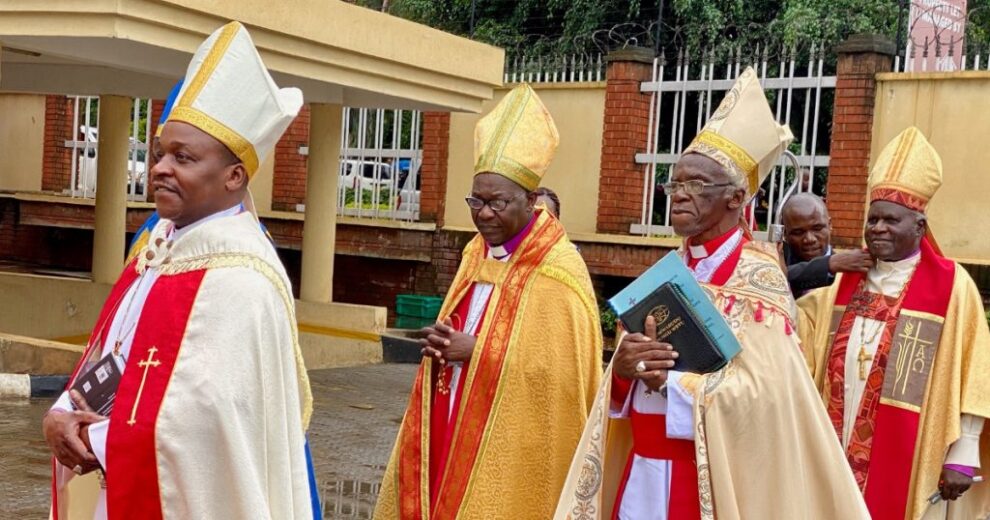
The Lutheran faith in Kenya is undergoing a historic transformation.
While the Evangelical Lutheran Church in Kenya (ELCK) continues to be recognized as the “mother church,” the rapid growth of the Lutheran Congregations in Mission for Christ (LCMC) reflects a nationwide trend toward decentralization and local autonomy that is reshaping the future of the denomination.
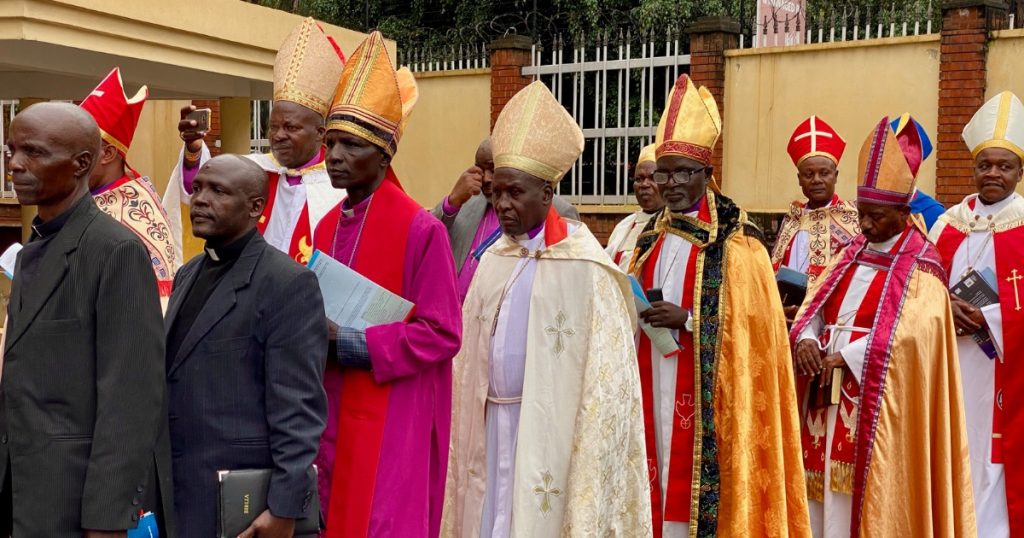 Most Rev. Dr. Joseph Ochola Omolo, Archbishop of the ELCK, overseeing national operations from the church’s headquarters at Uhuru Highway Cathedral, Nairobi. (Source: international.lcms.org)
1. Governance and Structure: The Power Divide
The tension between ELCK and LCMC can be understood as a contrast between centralized authority and local autonomy.
ELCK: The Institutional Giant
Archbishop Most Rev. Dr. Joseph Ochola Omolo leads ELCK, which follows an Episcopal structure.
The church centralizes authority at the Uhuru Highway Cathedral in Nairobi and flows it through diocesan bishops to local parishes.
With over 350,000 members, ELCK manages major national humanitarian projects, including the 2026 flood relief programs in the Lake Diocese.
LCMC: The Grassroots Reformers
LCMC operates as a congregational association that emphasizes local freedom. Individual congregations own their land titles and choose their pastors independently.
For many Kenyans, this bureaucracy-free approach offers a responsive, community-focused alternative to the complex administrative politics of ELCK.
| Feature | ELCK | LCMC |
|---|---|---|
| Leadership | Archbishop and Hierarchy | Local Elders and Parish Autonomy |
| Property | Centralized Ownership | Local Title Deeds |
| Governance Style | Traditional and Institutional | Mission Focused and Reformist |
| Legal Risk | High Synod-level lawsuits | Low Disputes handled locally |

2. Legal Battles: ELCK Under Scrutiny
The hierarchical nature of ELCK has occasionally led to high-profile litigation, influencing both labor and religious law in Kenya
Bishop Bakari Kea v ELCK
This case addressed the jurisdiction of the Employment and Labour Relations Court over church leadership disputes.
The ruling confirmed that even men of God are subject to constitutional labor rights.
Nyaata v ELCK 2023 to 2026
This case clarified that unincorporated organizations like ELCK must be sued through recognized officials such as the General Secretary or Archbishop.
It highlighted the legal challenges of managing a centralized church with hundreds of thousands of members.
These legal disputes illustrate the complexities inherent in centralized governance and demonstrate why some congregations are drawn to LCMC’s decentralized, autonomous model
3. The 2026 Outlook: Why the Shift Matters
The rise of LCMC reflects a broader Kenyan expectation for accountability, transparency, and local participation.
While ELCK continues to lead large-scale initiatives such as Project 24, which supports vulnerable children, LCMC is increasingly winning the hearts and minds of youth and rural communities who seek direct influence over their local congregations
This transformation is not just a denominational story. It reflects how governance, property rights, and leadership structures influence the future of Lutheranism in Kenya, shaping both worship experiences and community engagement
https://www.youtube.com/watch?v=SigJskLg8HA&t=11s&pp=ygUNZWxjayB3cmFuZ2xlcw%3D%3D