
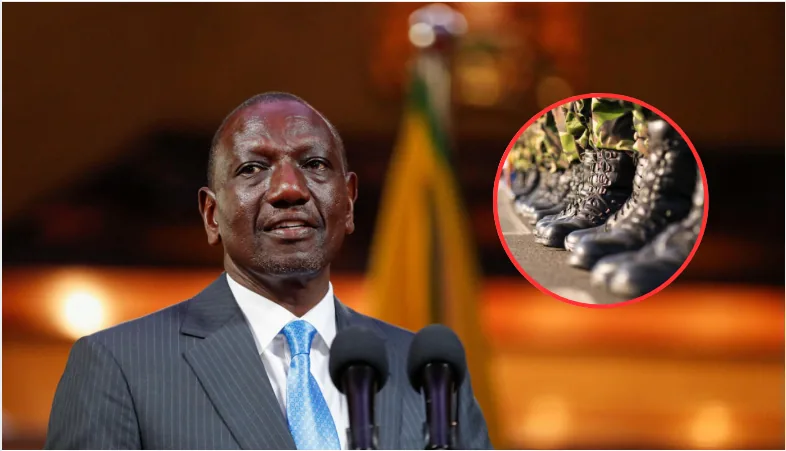
President William Ruto has announced that all shoes purchased for Kenya’s security agencies will now be produced locally, in a move aimed at strengthening domestic manufacturing and reducing reliance on imports.
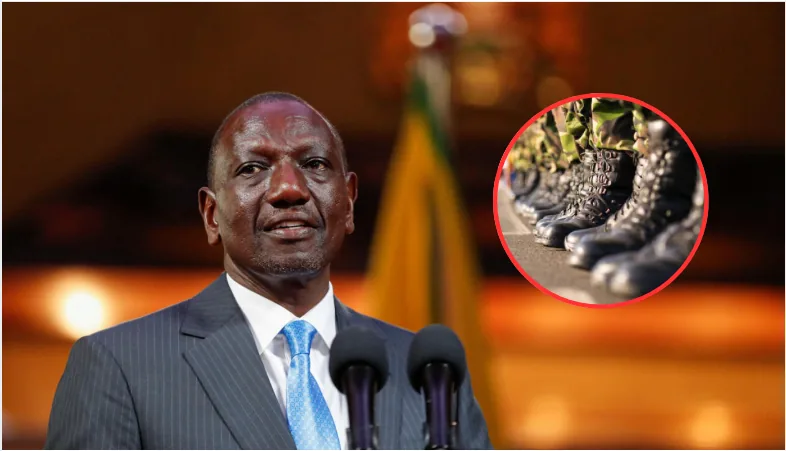
Speaking during an interview with Felix Omondi, popularly known as Dr King’ori, on Monday, June 29, Ruto said he had directed that government procurement of footwear for the National Police Service (NPS), the Kenya Defence Forces (KDF), and the Kenya Prisons Service be fully reserved for Kenyan manufacturers.
“The one instruction I have given is that any money spent on buying shoes for our security agencies must be used to purchase shoes made in Kenya,” he said.
The President explained that when concerns were initially raised about the quality of locally made shoes, he instructed relevant officials to provide manufacturers with clear specifications rather than sourcing products from abroad. He said this approach enabled local producers to meet the required standards, paving the way for full adoption of locally made footwear.
Ruto added that Kenya’s annual shoe production has grown significantly, rising from about five million pairs to 11 million pairs over the past three years. The government is now targeting an output of 20 million pairs annually as part of efforts to expand the sector.
He further noted that the initiative is expected to create up to 20,000 jobs, with local manufacturers also collaborating with technical institutions to train skilled workers in shoemaking and leather production.
According to the President, the shift is part of a broader industrialisation strategy designed to keep more value within the country by supporting local industries and reducing imports.
He pointed to the County Aggregation and Industrial Parks (CAIPs) programme, which is being rolled out across all 47 counties to support manufacturing close to raw material sources. The parks are designed to mirror facilities such as Kariokor, where government-supported machinery is used for production.
Ruto said some of the industrial parks are already beginning to attract investors. He cited the Sagana industrial park, where two investors have started processing goods using raw materials sourced locally in Kirinyaga County, while the Busia facility is nearing completion.
The President said the industrial parks are intended to reduce raw material exports, encourage local value addition, and create employment opportunities for young people across the country.