
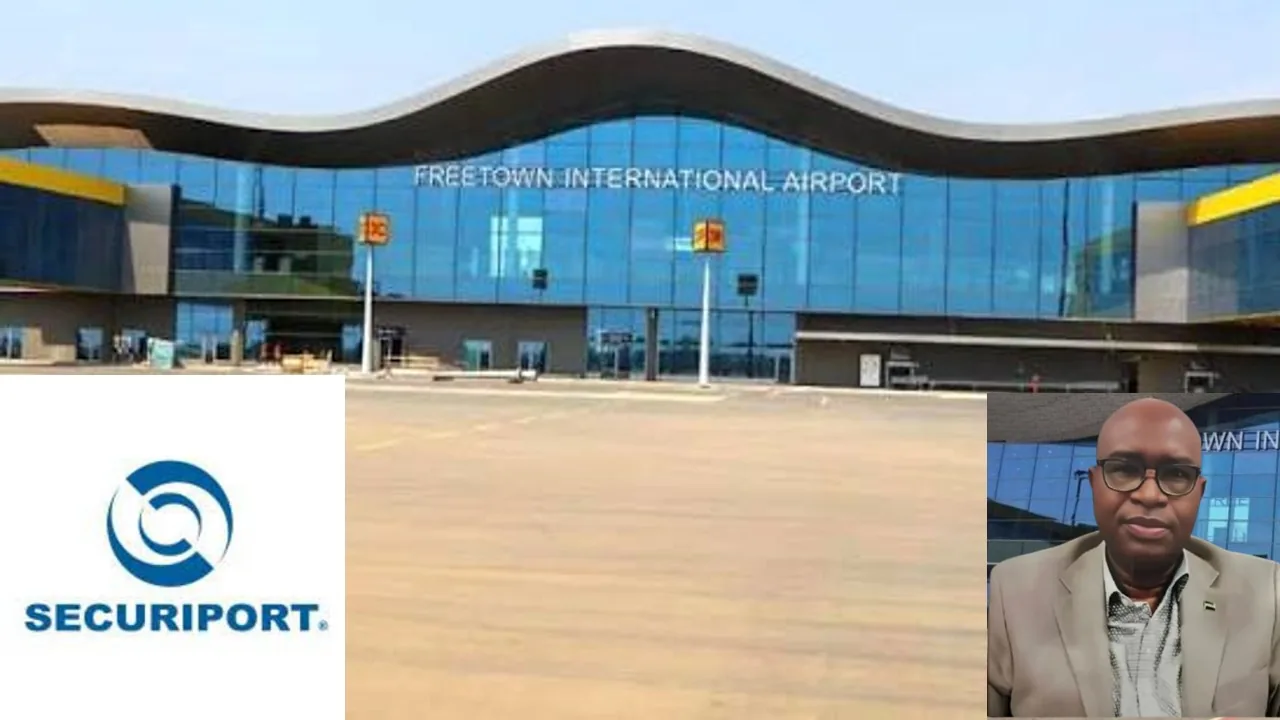
The Government of Sierra Leone’s decision to temporarily suspend the collection of the controversial US$25 Airport Security Fee at the Freetown International Airport has intensified public demands for a comprehensive review of the contractual relationship between the Government and Securiport (SL) Limited, with many citizens describing the move as the first meaningful step toward addressing years of concerns over the management, transparency and accountability surrounding the controversial levy.
The temporary suspension, which took effect on Monday, 6th July 2026, followed a ministerial directive issued by the Ministry of Internal Affairs as part of an ongoing review of the existing contractual framework and an independent Special Audit currently being undertaken by the Audit Service Sierra Leone (ASSL).
For years, travelers using Freetown International Airport have consistently complained about the additional US$25 security charge collected separately from airline tickets, arguing that the fee created unnecessary delays, inconvenienced passengers and tarnished Sierra Leone’s image as a travel destination.
Many passengers have maintained that if such a security levy was genuinely necessary, it should have been incorporated into the airline ticketing system like airport taxes collected in many other jurisdictions rather than requiring passengers to make separate payments before departure or upon arrival.
The latest Government intervention has therefore been welcomed by travelers, tourism stakeholders and members of the business community, many of whom believe the suspension should become permanent if the ongoing review establishes that the current arrangement is no longer in the country’s best interest.
The Ministry of Internal Affairs, in a public notice dated 3rd July 2026, explained that the suspension was purely an administrative measure intended to facilitate the comprehensive contract review and enable auditors to complete an independent examination of the agreement and operational processes.
The Ministry further assured the public that the directive does not amount to a termination of Securiport (SL) Limited’s operating contract.
According to the notice, Securiport will continue maintaining its technological background operations, including the logging of inbound and outbound passenger data, excluding diplomatic passport holders, while the review remains underway.
However, the Government’s decision has reignited broader public debate over the entire agreement signed between Sierra Leone and Securiport (SL) Limited.
Several governance advocates argue that the ongoing review presents an opportunity to examine every aspect of the contract, including revenue collection mechanisms, expenditure, value for money, procurement procedures, operational efficiency and compliance with national financial regulations.
The announcement has also fueled speculation that individuals who allegedly benefited from proceeds generated through the Airport Security Fee may now be uneasy as scrutiny intensifies over the agreement.
While such allegations continue to circulate in political and public discourse, no official findings have been released identifying any individual or institution as having improperly benefited from the security fee. Any determination of wrongdoing would ultimately depend on the outcome of the independent audit and any subsequent investigations by the relevant authorities.
Observers say the Special Audit by the Audit Service Sierra Leone could provide an important opportunity to establish factual information regarding the financial flows associated with the security fee, the implementation of contractual obligations and whether the agreement has consistently delivered value for the Sierra Leonean people.
Anti-corruption campaigners have similarly argued that transparency should be the guiding principle throughout the review process, emphasizing that all findings should be made public to strengthen public confidence in Government institutions.
The suspension has also prompted discussions over the continued reliance on manual cash collection systems at the country’s principal international gateway.
Industry experts have questioned why such collections continued for years despite advances in integrated electronic ticketing systems used globally.
According to aviation professionals, incorporating legitimate airport charges into airline ticket prices generally improves efficiency, minimizes opportunities for cash handling and enhances accountability through automated reconciliation systems.
The Ministry itself acknowledged these concerns, noting that the existing manual collection process is cumbersome, inconvenient for passengers and inconsistent with modern airport operations.
Government officials have indicated that one objective of the review is to explore more seamless and integrated collection mechanisms capable of eliminating public inconvenience while ensuring operational effectiveness.
Meanwhile, some commentators have expressed concerns that any eventual restructuring of the arrangement should be handled carefully to avoid exposing Sierra Leone to unnecessary contractual disputes or financial liabilities.
However, others have dismissed suggestions that reviewing the agreement necessarily places the country at legal risk, arguing that Governments have both the authority and responsibility to periodically assess contracts involving public revenue, particularly where issues of efficiency, accountability and public interest arise.
Legal analysts note that contract reviews and independent audits are internationally recognized governance tools designed to ensure compliance with contractual obligations and determine whether agreements continue serving the intended public purpose.
As the Special Audit progresses, public expectations continue to rise.
Many Sierra Leoneans believe the review should not simply focus on whether the US$25 fee should resume but should instead examine the broader governance framework surrounding airport security services, procurement processes, financial accountability and the overall benefits derived from the partnership.
Civil society organizations have also called on the Government to publish the audit findings once completed and to ensure that any recommendations arising from the review are fully implemented.
For many travelers, the temporary suspension has already brought immediate relief by removing an additional financial burden that had become synonymous with frustration at the country’s main international airport.
Whether the suspension ultimately becomes permanent or evolves into a redesigned and more transparent collection system will likely depend on the findings of the independent audit, the outcome of the Government’s contract review and any policy decisions that follow.
What remains clear is that the current review has opened one of the most significant examinations of Sierra Leone’s airport security fee regime since its introduction, placing the operations of Securiport (SL) Limited and the broader management of airport security revenue under unprecedented public scrutiny.