
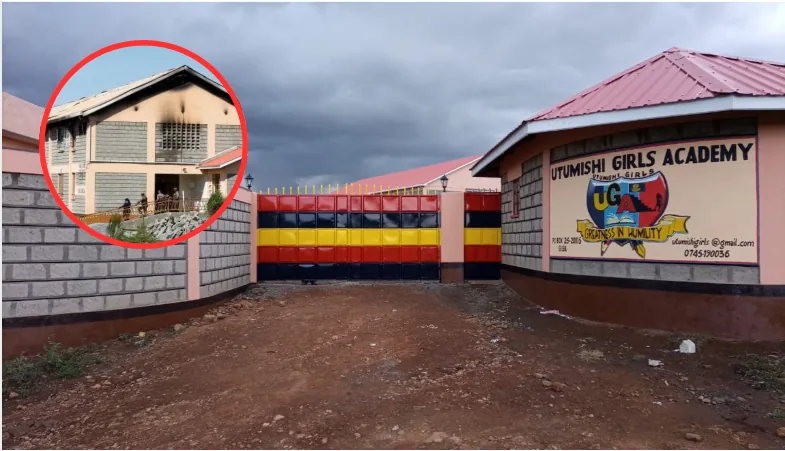
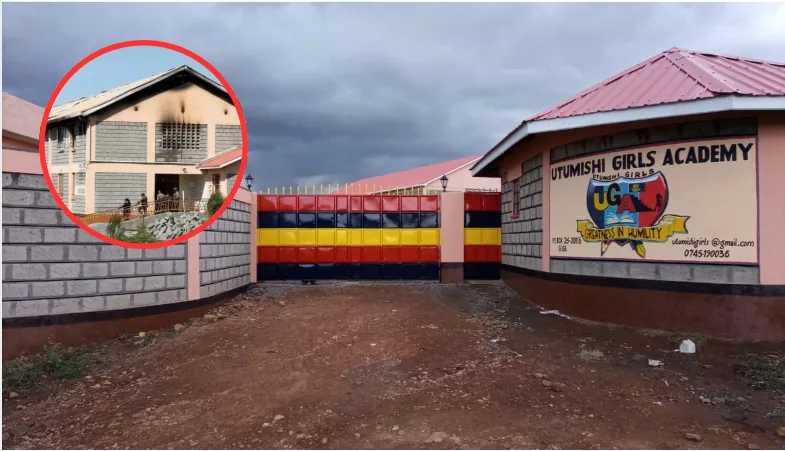
Utumishi Girls Academy is set to reopen on Thursday, July 2, following a decision reached during an eight-hour meeting between parents and officials from the Ministry of Education on Monday, June 29. The reopening comes more than a month after a dormitory fire tragedy that claimed the lives of 16 students.
As part of the reforms agreed upon, the school principal has been placed on compulsory leave, a move that parents and officials cited as a key step toward restoring confidence in the institution’s safety and management. The decision follows growing pressure for accountability in the wake of the incident that exposed gaps in school safety compliance.
The reopening will be implemented in phases, with Form Four students expected to report first on Thursday, July 2. The rest of the learners will resume classes on Monday, July 6.
Initially, parents had opposed the reopening plans, insisting that they would not allow their children back to school until clear safety measures were put in place. They raised concerns that the school administration had not provided a detailed roadmap outlining reforms after the fire that killed 16 students and sparked national scrutiny of boarding school safety standards.
However, after discussions with Ministry of Education officials, parents agreed to allow the phased reopening after being presented with a series of administrative and infrastructural interventions. Among the key changes highlighted was the principal’s compulsory leave, which was seen as part of broader accountability measures.
Education Cabinet Secretary Julius Ogamba had earlier dissolved the school’s Board of Management, citing failure to comply with the School Safety Manual and Basic Education Regulations, further intensifying reforms at the institution.
During the transition period, students will be accommodated in dormitories that were not affected by the fire. The National Police Service is also constructing temporary structures to ease accommodation pressure as long-term rebuilding efforts continue.
To manage overcrowding, the school will expand its dining hall and convert two classrooms into temporary dormitories while new infrastructure is being developed.
Despite agreeing to the reopening, some parents expressed frustration over what they described as slow government action in restoring the school’s facilities. They called for urgent funding and reconstruction efforts, comparing the response to other large-scale government projects.
“We are giving the government until August to act. It cannot be that the government can spend hundreds of millions to construct a stadium in Wajir but cannot set aside Ksh30 million for a simple dormitory,” one parent said.
Meanwhile, the Kibera High Court has ordered mental assessments for eight students charged in connection with the fire incident. The accused students will undergo evaluation by a child psychiatrist at Mathare Mental Hospital, alongside assessments by a Children’s Officer, before the case proceeds further.
The phased reopening marks a cautious return to normalcy for the school community, even as legal and reconstruction processes continue.