
Kenya’s avocado export system is now at the centre of a detailed review after 33,205 tonnes valued at Ksh 5.8 billion were shipped during a government declared closed season, with 3,107 shipping containers recorded as having left the country between November 2025 and the end of March 2026 under export certification issued within the restriction window.
The closed season, introduced under the Crops (Horticultural Crops) Regulations, 2020 and enforced through a directive beginning October 20, 2025, was designed to prevent immature fruit from entering foreign markets and weakening Kenya’s export reputation, yet certification records from the Horticultural Crops Directorate show continued approval of shipments throughout the period.
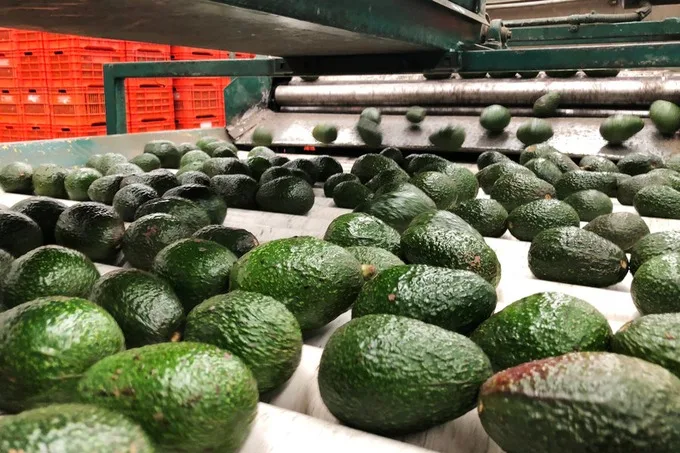
KenTrade data shows export certificates worth Ksh 5.832 billion were issued during the 12-week restriction period, a volume that corresponds to roughly one-third of Kenya’s annual avocado production, far beyond the expected second flush harvest contribution from Western Kenya and the North Rift, which normally accounts for about three percent of national output under exemption rules.
Major exporters and certification chain under review
Shipments during the closed season involved established firms such as Seasons Orchards, Keitt Exporters, and Kenya Fresh Exporters Limited, all operating with export licences issued by the Horticultural Crops Directorate and phytosanitary certification issued by the Kenya Plant Health Inspectorate Service, enabling containers to move through official export channels.
KEPHIS Managing Director Theophilus Mutui stated that phytosanitary certificates are issued only after confirming compliance with required export standards, while AFA Director General Bruno Linyiru had issued earlier notices on packaging violations, sourcing from unregistered suppliers, and inspection obstruction, though he did not clarify how export certification continued during the ban period.
The Horticultural Crops Directorate later acknowledged during a March 31, 2026 stakeholder meeting that exports had taken place during the restriction window and indicated that a list of exporters had been compiled, while Director Christine Chesaro stated that action would be taken and later indicated that confirmation from exporters was being sought before public disclosure.
Industry sources describe the certification sequence as operating in parallel with the restriction order, allowing export documentation to continue supporting shipments even as the closed season remained in effect on paper.
MT Paloma fuel shipment and Ksh 12 billion valuation
On March 27, 2026, the tanker MT Paloma docked at the Port of Mombasa carrying 60,200.813 metric tonnes of premium motor spirit valued at Ksh 198,855 per metric tonne at distribution level, forming part of a government to government fuel supply arrangement under review.
Within this framework, comparable government sourced fuel is priced at approximately United States dollars 84 per metric tonne, equivalent to about Ksh 10,934, while documentation linked to One Petroleum Limited shows an import cost of United States dollars 253.94 per metric tonne, equivalent to about Ksh 33,013, producing an estimated cargo valuation of about Ksh 12 billion and gross margin estimates near Ksh 10 billion after import cost calculations.
Energy Cabinet Secretary Opiyo Wandayi stated that a comparable consignment under government procurement structures would have cost about Ksh 8.4 billion, while MT Paloma cargo valuation stood at about Ksh 11.8 billion, forming part of ongoing commercial assessment of pricing structures.
Authorisation, waiver process and tax position
Import authorisation began following a March 9 National Security Council Committee meeting chaired by Chief of Staff Felix Koskei, while Petroleum Principal Secretary Mohamed Liban on March 25 authorised One Petroleum Limited and Oryx Energies to import up to 66,000 tonnes each, even as MT Paloma was already in transit.
Correspondence to the Kenya Bureau of Standards indicated that ship to ship transfer methods meant certification may not have followed standard load port procedures, while a March 28 waiver allowed entry of fuel exceeding prescribed limits under specified conditions that were not fully implemented before distribution.
Invoices under reference KGC01 2026 dated March 28 recorded transactions at Ksh 198,855 per metric tonne and indicated zero percent value added tax, creating an uncollected tax value estimated at approximately Ksh 1.91 billion on a total transaction value of about Ksh 12 billion at a 16% rate.
Distribution chain and regulatory departures
One Petroleum stated that the cargo did not enter the domestic market after a withdrawal directive, while Kenya Pipeline Company confirmed that fuel was blended with existing stocks and distributed to Oil Marketing Companies across the country.
Discharge operations between March 27 and March 29 coincided with the Easter holiday period, a phase of elevated consumption that increased the likelihood of widespread distribution before intervention measures could take effect.
The divergence between corporate statement and pipeline confirmation is supported by invoice timing and distribution records that place transaction execution before withdrawal communication was fully implemented across the supply chain.
Corporate structure and parallel legal exposure
Corporate registry records show that One Petroleum Limited is owned by Mohamed Jaffer, Mujtaba Jaffer, Ali Abbas Jaffer, and Mohamed Husein Jaffer, with Mbaraki Holdings Limited of Mauritius holding 41,098 ordinary shares, forming part of a cross border ownership structure linked to the transaction.
Parallel legal proceedings involve the East African Development Bank, which is pursuing a claim of 9.9 million United States dollars, equivalent to about Ksh 1.2 billion, against Mujtaba Jaffer and co defendants linked to Kenya Bus Services Mombasa Limited, with the matter before Justice Kizito Magare and judgment scheduled for June 10.
The bank maintains that guarantees signed by Mujtaba Jaffer, Manoj Shah, and Reena Amritlal remain enforceable, while the defendants argue that guarantee terms were altered without consent, creating a contractual dispute still under judicial determination.
Avocado export disruption and supply shock
Kenya’s avocado sector recorded exports of 848,122 tonnes in 2024 generating Ksh 41 billion, with production rising 34% from the previous year, yet the current disruption has created supply shortages affecting nearly 300 compliant exporters who returned to market after April 2, 2026.
Industry representatives led by Avocado Exporters Association of Kenya chief executive Waithaka Wagura describe an artificial shortage created by illegal exports during the closed season, which left orchards depleted before compliant exporters resumed operations.
Avocado oil production rose from 3,326 metric tonnes in 2024 to 10,188 metric tonnes in 2025, creating industrial demand pressure that is now affected by reduced fruit availability and disrupted harvest cycles.
Market shift and international rerouting
FAO trade data shows Morocco’s avocado exports increased to 141,000 tonnes in 2025 from under 60,000 tonnes the previous year, with trade sources indicating that Kenyan fruit is being rerouted through North African channels to remove origin identification before reaching European markets.
European importers have reported rejection of consignments linked to immature fruit quality, with documented cases of fruit turning black upon thawing, indicating harvest below required dry matter thresholds.
Kenya remains a major global avocado producer with approximately 966,000 farmers involved, yet supply chain disruption has affected pricing stability and export reliability across major destination markets.
Regulatory enforcement and pending actions
Regulatory agencies have not publicly released exporter lists or confirmed license revocations, while investigative processes under Kenyan law continue to examine certification, export authorisation, and distribution pathways linked to both agricultural and fuel sector transactions.
Multiple enforcement institutions retain authority under existing legal frameworks to pursue compliance action, while sector stakeholders continue to await formal publication of enforcement outcomes linked to certification and export irregularities.