
A renewed multi-agency response is underway in Mlolongo after environmental officials returned to the Athi Dam ecosystem on Monday to collect water samples, days after a suspected chemical discharge was reported within the wider Nairobi National Park drainage system.
The Kenya Wildlife Service (KWS) first raised concern after officers detected abnormal foamy water with white bubbles and unusual discolouration entering Nairobi National Park through the Mlolongo drainage corridor on 30 April 2026, a development that triggered immediate attention due to its connection to downstream river systems feeding into the Mbagathi and Athi Rivers.
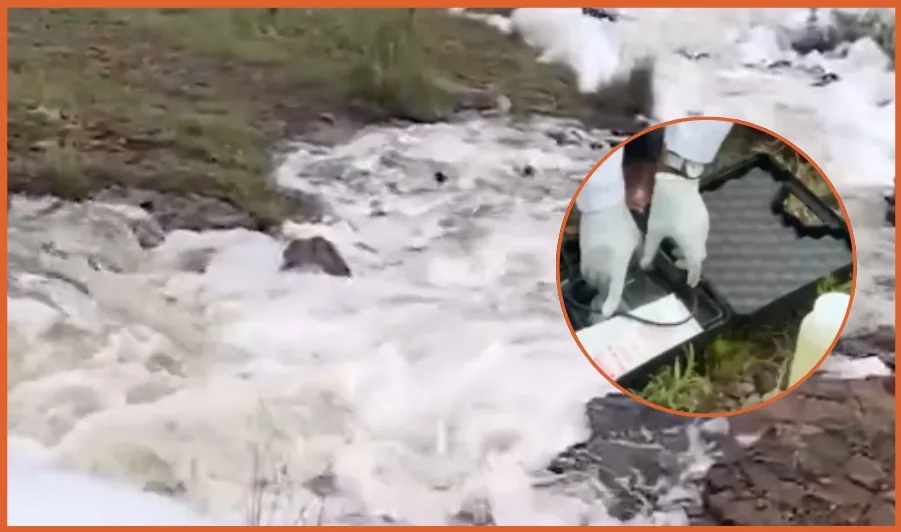
At the time, KWS warned that the affected network places Athi Dam at risk as a key resource supporting wildlife, aquatic life, and surrounding communities that depend on it for domestic and agricultural use, prompting coordination with environmental regulators.
During Monday’s visit, officials from KWS, National Environment Management Authority (NEMA), Water Resources Authority (WRA), and other water sector agencies assessed sections of the Athi Dam catchment identified as potential contamination pathways, collecting samples for laboratory analysis aimed at determining the nature, concentration, and possible source of the suspected pollutants.
The inquiry has also extended to upstream tracing of possible discharge points and monitoring of industrial activity along the Nairobi National Park boundary, as authorities continue efforts to establish the origin of the contamination and assess any ongoing risk to the protected ecosystem and connected water systems.