
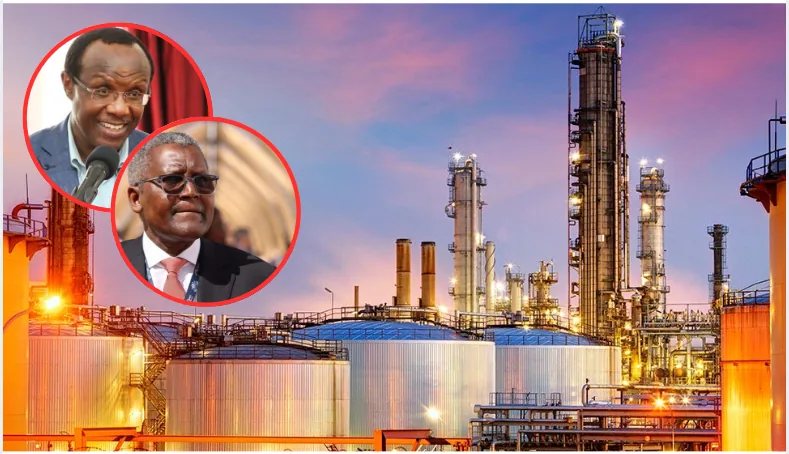
The planned Ksh2.2 trillion East African oil refinery in Lamu will be developed as a broader petrochemical complex designed to support multiple industries beyond petroleum processing, economist David Ndii has revealed.
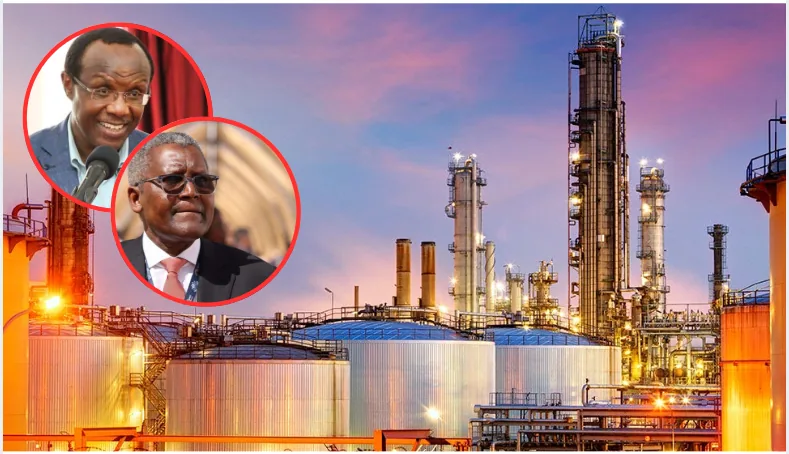
Ndii said the project will not operate as a standalone refinery but will include additional facilities aimed at increasing value addition and creating opportunities across different sectors of the economy.
“We are building a petrochemical complex, not just a refinery, which will add value by at least 50 per cent,” Ndii said.
Unlike a conventional refinery that mainly produces petroleum products such as diesel, petrol and fuel oil, a petrochemical complex converts oil and natural gas by-products into chemical materials used by various manufacturing industries.
The planned Lamu facility is expected to include industries producing raw materials for sectors such as plastics, packaging, construction, agriculture and consumer goods manufacturing.
Potential products from the complex could include polyethene (PE), polyvinyl chloride (PVC) and polystyrene (PS), which are widely used in manufacturing plastic containers, pipes, household products and industrial packaging materials.
The facility could also produce chemicals such as resins, polymers and solvents that support manufacturers involved in producing finished goods.
Beyond manufacturing, the petrochemical complex could support agriculture through the production of materials used in fertiliser manufacturing and other farming-related chemicals.
Other industries, including paint, detergent, cosmetics and synthetic fibre manufacturers, could benefit from chemical outputs such as methanol and other industrial intermediates.
The project is also expected to create a wider industrial ecosystem around Lamu, generating opportunities in storage, transportation, distribution and related businesses.
According to Ndii, the refinery and petrochemical complex could significantly transform Lamu County’s economy by increasing its Gross Domestic Product (GDP) by approximately Ksh322.9 billion ($2.5 billion).
He said the projected contribution would be equivalent to about 25 per cent of Kenya’s current manufacturing GDP, estimated at Ksh1.29 trillion ($10 billion), although he noted that the figure could still be an underestimate.
The latest details emerge after President William Ruto confirmed that preparations for the project are at an advanced stage, with the government having set a date for the groundbreaking ceremony.
The Lamu refinery project is expected to become one of Kenya’s largest industrial investments, with the government projecting significant benefits in job creation, manufacturing growth and economic transformation.