
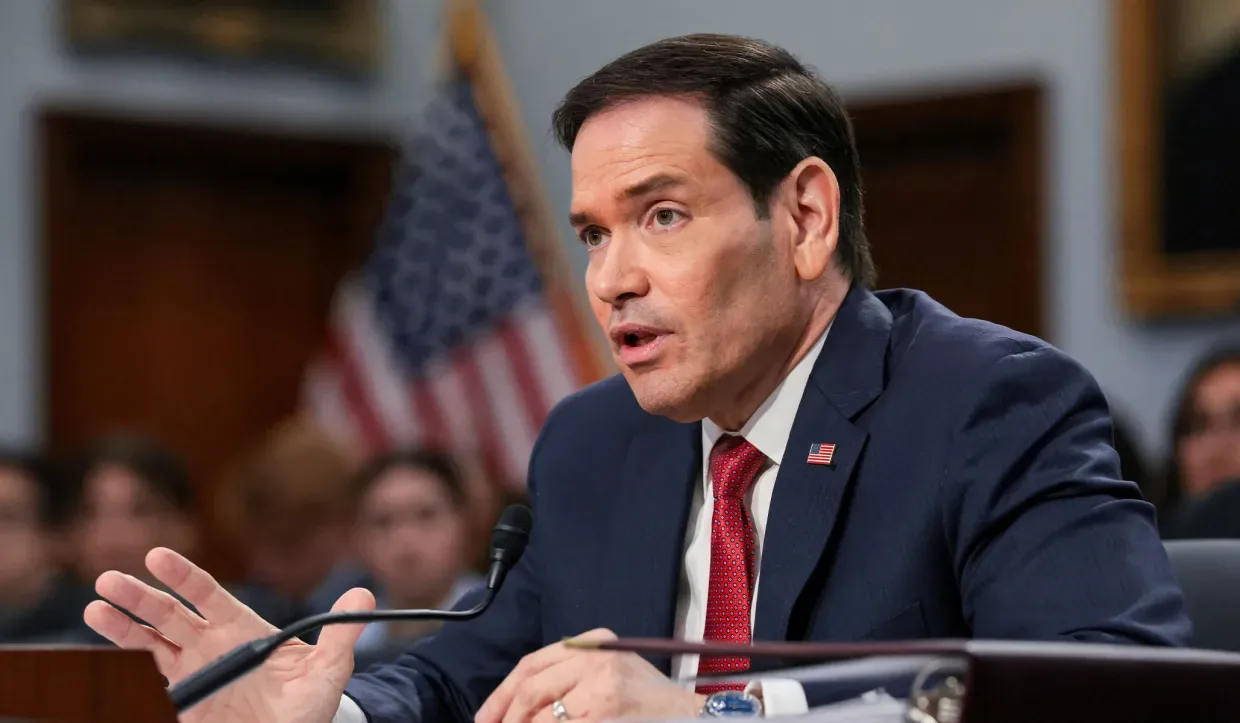
U.S. Secretary of State Marco Rubio has arrived in Abu Dhabi, United Arab Emirates, as part of a three-nation Gulf tour aimed at calming regional concerns over a tentative U.S.-brokered agreement with Iran. The visit comes after intense diplomatic talks in Switzerland between the United States and Iran, led by Vice President JD Vance, which reportedly produced a preliminary framework to end hostilities across the region and restart broader negotiations on Iran’s nuclear program.
The agreement under discussion is said to include a roadmap for ending regional conflict, reopening key shipping routes such as the Strait of Hormuz, and potentially easing sanctions on Iran if further negotiations succeed. However, Gulf Arab states including the UAE, Kuwait, and Bahrain remain cautious, particularly given their recent experience of missile and drone attacks linked to Iranian-backed forces during the wider regional conflict.
Rubio is expected to meet senior leaders in the Gulf to address skepticism surrounding the deal, especially concerns that it does not fully address Iran’s missile program or its network of regional proxy groups. Critics in the region argue that any lasting agreement must go beyond nuclear issues and include limits on Iran’s support for armed groups across the Middle East.
Speaking upon arrival, Rubio defended the framework, insisting that the memorandum of understanding already commits all parties to a “complete end of hostilities.” He argued that this would require Iran to stop supporting groups such as Hamas, Hezbollah, and the Houthis, and emphasized that sustained peace cannot exist while proxy attacks continue.
Another major point of contention is the future of maritime access through the Strait of Hormuz, one of the world’s most critical oil shipping lanes. Gulf states have pushed for guarantees that the waterway remains open and free of charges, after reports suggested Iran might seek to impose transit fees under the proposed arrangement. Rubio rejected that idea outright, stating that international waterways cannot be subject to tolls or unilateral control, a position he said is widely shared by regional governments.
The diplomatic tour underscores the fragile balance in ongoing U.S.-Iran negotiations and the broader effort to stabilize a region long shaped by conflict, sanctions, and competing security interests.