
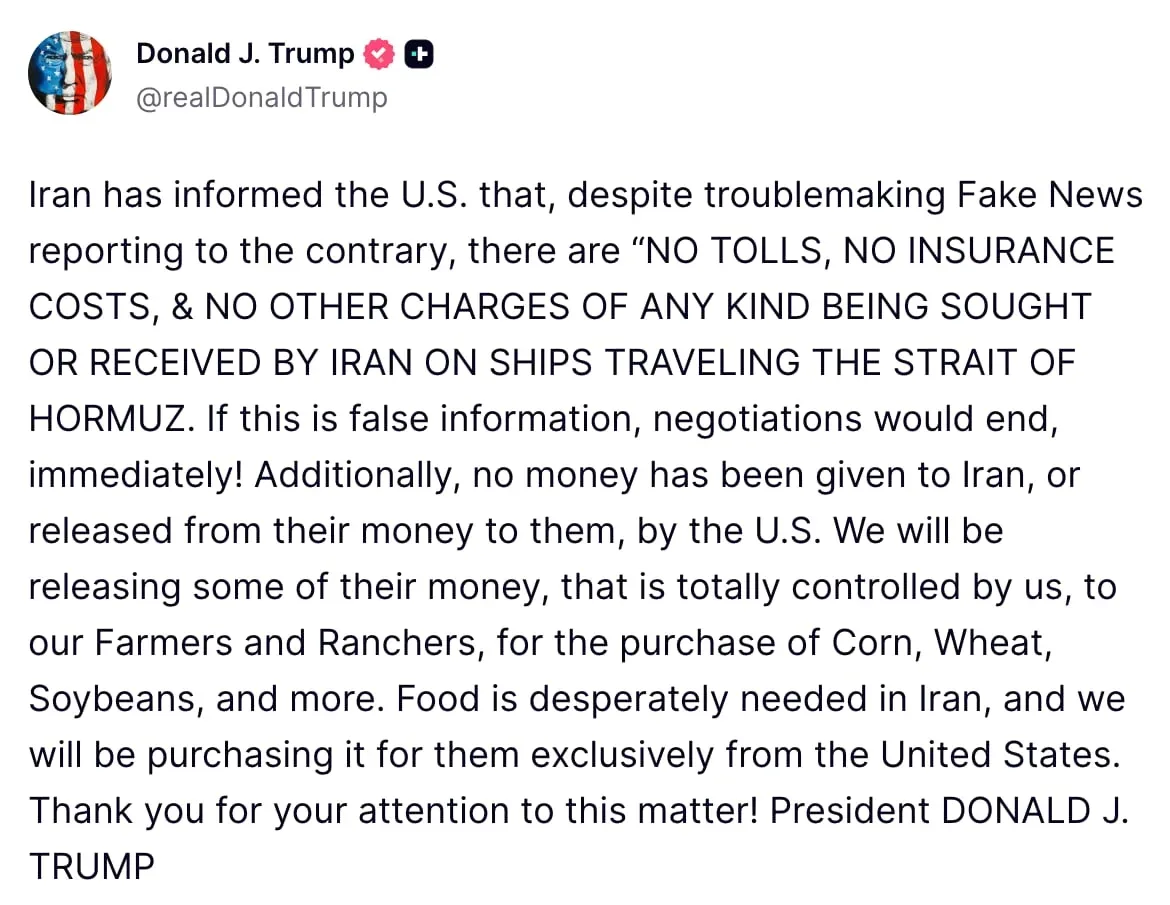
President Donald Trump used a series of early morning social media posts on Wednesday to defend ongoing negotiations with Iran, pushing back against reports that Tehran could impose new fees on commercial vessels passing through the strategically important Strait of Hormuz.
In a lengthy Truth Social post, Trump claimed Iranian officials had informed the United States that they were not seeking tolls, insurance charges, or any other fees from ships using the waterway. He suggested that reports claiming otherwise were inaccurate and warned that negotiations could collapse if such information proved false.
The president also denied reports that the United States had transferred money directly to Iran as part of the ongoing talks. Instead, Trump said that funds currently under U.S. control could be used to purchase agricultural products from American farmers and ranchers for shipment to Iran, which he described as facing significant food shortages.
The comments came as negotiations aimed at securing a lasting peace agreement between Washington and Tehran continue to face political and diplomatic challenges.
The Strait of Hormuz remains one of the world's most important shipping routes, carrying a significant share of global oil and energy exports. Any changes to access, fees, or shipping regulations in the region could have major implications for international trade and energy markets.
Questions surrounding possible transit charges have become a point of contention during negotiations. While Trump insisted Iran has not demanded such fees, uncertainty remains regarding Tehran's position, and Iranian officials have previously disputed claims made by members of the U.S. negotiating team.
The president's social media activity began several hours earlier when he posted a message declaring that America would "never be a Communist Country," an apparent reference to recent political developments involving progressive candidates in the United States.
The Iran negotiations have generated intense debate in Washington, including criticism from some members of Trump's own political coalition.
Critics argue that elements of a proposed framework for ending the conflict could provide significant concessions to Iran in exchange for regional stability and the reopening of commercial shipping routes.
Among the reported provisions under discussion are guarantees for the safe passage of commercial vessels through the Strait of Hormuz, potential easing of certain U.S. restrictions on Iranian assets, and economic assistance linked to post-war reconstruction efforts.
Supporters of the negotiations argue that diplomacy offers the best opportunity to prevent further conflict in the region and stabilize global energy markets. Opponents, however, contend that any agreement must ensure strong safeguards and avoid rewarding behavior they view as threatening to regional security.
Vice President JD Vance recently indicated that progress had been made in discussions, including claims that Iran may allow inspectors from the International Atomic Energy Agency to return to the country. Iranian officials have not fully confirmed those assertions.
As negotiations continue, both governments face growing pressure to demonstrate tangible progress while addressing concerns from domestic critics and international allies.
For now, Trump's latest comments underscore the administration's determination to keep talks alive despite lingering disagreements over shipping rights, sanctions relief, inspections, and the broader terms of a potential peace agreement.