
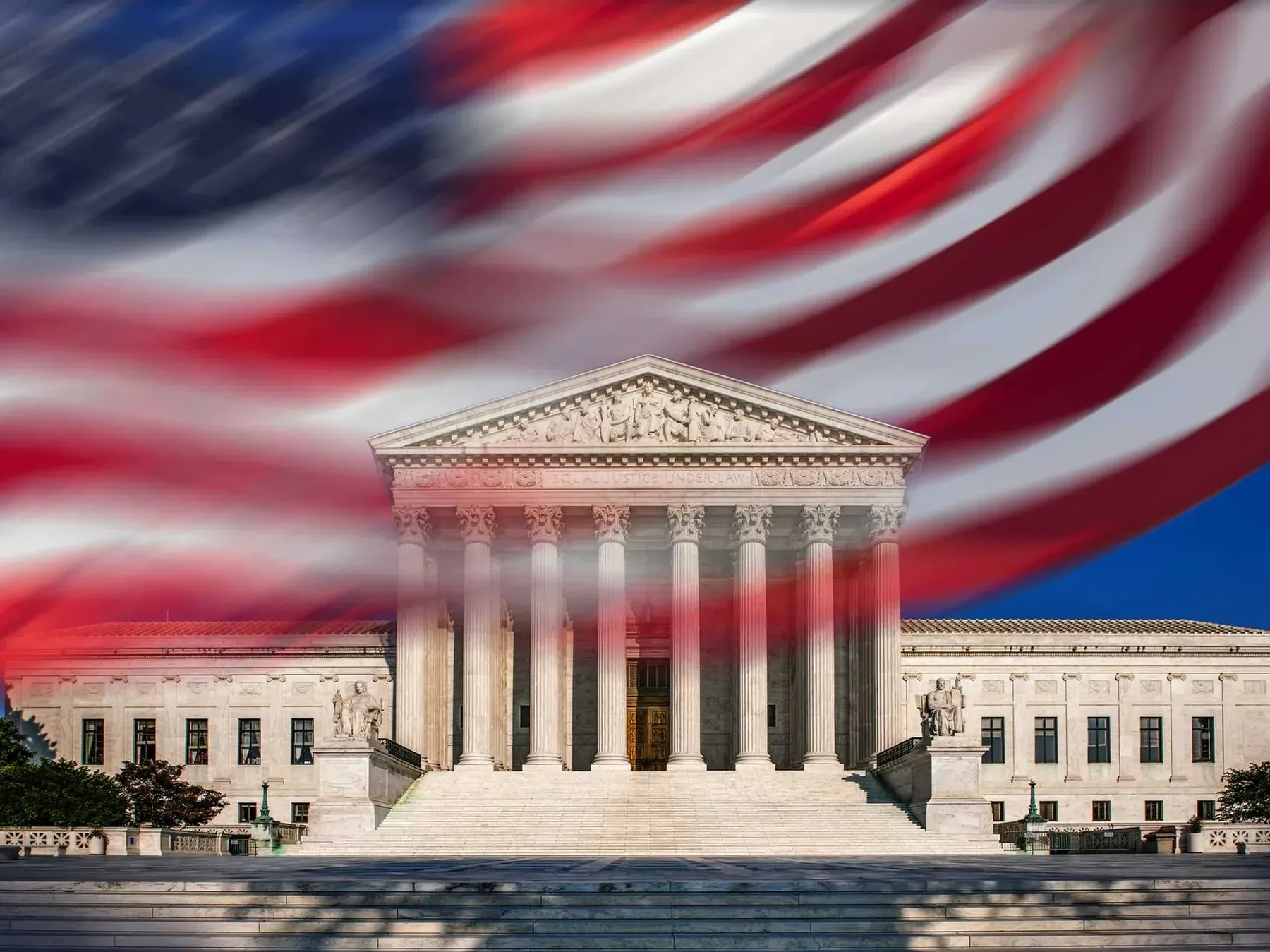
A federal judge has permanently blocked President Donald Trump's administration from enforcing key provisions of an executive order that sought to reshape U.S. election rules, including a requirement for voters to provide documentary proof of citizenship when registering to vote.
The ruling, issued Wednesday by U.S. District Judge Denise Casper, converts a preliminary injunction issued a year earlier into a permanent ban, preventing the administration from moving forward with most of the contested election measures.
In her decision, Casper rejected the administration's argument that legal challenges were premature because the proposed rules had not yet been fully implemented. Instead, she concluded that the U.S. Constitution grants authority over elections primarily to states and Congress, not the president.
"The Constitution does not grant the President any specific powers over elections," Casper wrote in the ruling.
Trump's executive order included several significant changes to election administration. Among them were requirements for voters to present documentary proof of citizenship when registering, restrictions on counting mail-in ballots that arrive after Election Day even if postmarked on time, and financial penalties for states that failed to comply with the new federal standards.
The decision was welcomed by Democratic attorneys general who challenged the order in court.
Letitia James praised the ruling, describing the executive order as an unconstitutional attempt to control election administration. She said protecting voting rights remains a priority ahead of this year's midterm elections.
Similarly, Rob Bonta, whose state led the lawsuit, said the decision reaffirmed the constitutional principle that states and Congress are responsible for setting election rules. He added that legal challenges to Trump's election-related policies would continue.
The White House and the U.S. Department of Justice did not immediately respond to requests for comment following the ruling.
The decision marks another legal setback for Trump's election agenda. Several courts have already blocked portions of the executive order, including efforts to add a proof-of-citizenship requirement to the federal voter registration form and proposals affecting military voters.
Despite the court defeats, Trump has continued pushing for similar reforms through Congress. The president has strongly backed the SAVE America Act, legislation that would establish nationwide proof-of-citizenship requirements for voter registration.
The bill has already passed the House of Representatives but remains stalled in the Senate, where it lacks sufficient support to overcome procedural hurdles. Trump has repeatedly called for changes to Senate rules in an effort to advance the legislation.
The president recently demonstrated the importance he places on the measure by delaying the signing of a bipartisan housing bill, saying he would not move forward with other legislative priorities until Congress addressed his election reform demands.
Trump and many Republican allies have argued that stronger voter verification measures are needed to prevent noncitizen voting. However, election experts and government studies have consistently found that instances of noncitizen voting in federal elections are extremely rare.
Current federal law already requires voters registering through the national voter registration form to certify under penalty of law that they are U.S. citizens. False claims of citizenship can result in felony charges, imprisonment, fines, or deportation.
Meanwhile, another major election-related case is awaiting a decision from the Supreme Court of the United States. The court is expected to rule on whether states can continue counting mail ballots that arrive after Election Day if they were postmarked on time.
That decision could have significant consequences for election procedures in 14 states that currently allow ballots to be counted during post-election grace periods ranging from several days to multiple weeks.
Judge Casper, who was nominated to the federal bench by former President Barack Obama, currently serves as chief judge of the federal district court in Massachusetts.